Gyms and leisure centres use water in ways that can create aerosols, particularly through showers and other spray outlets. Many sites also have complex hot-water distribution, changing rooms, little-used facilities and variable occupancy. That combination makes a structured Legionella risk assessment especially important for operators and facilities managers.
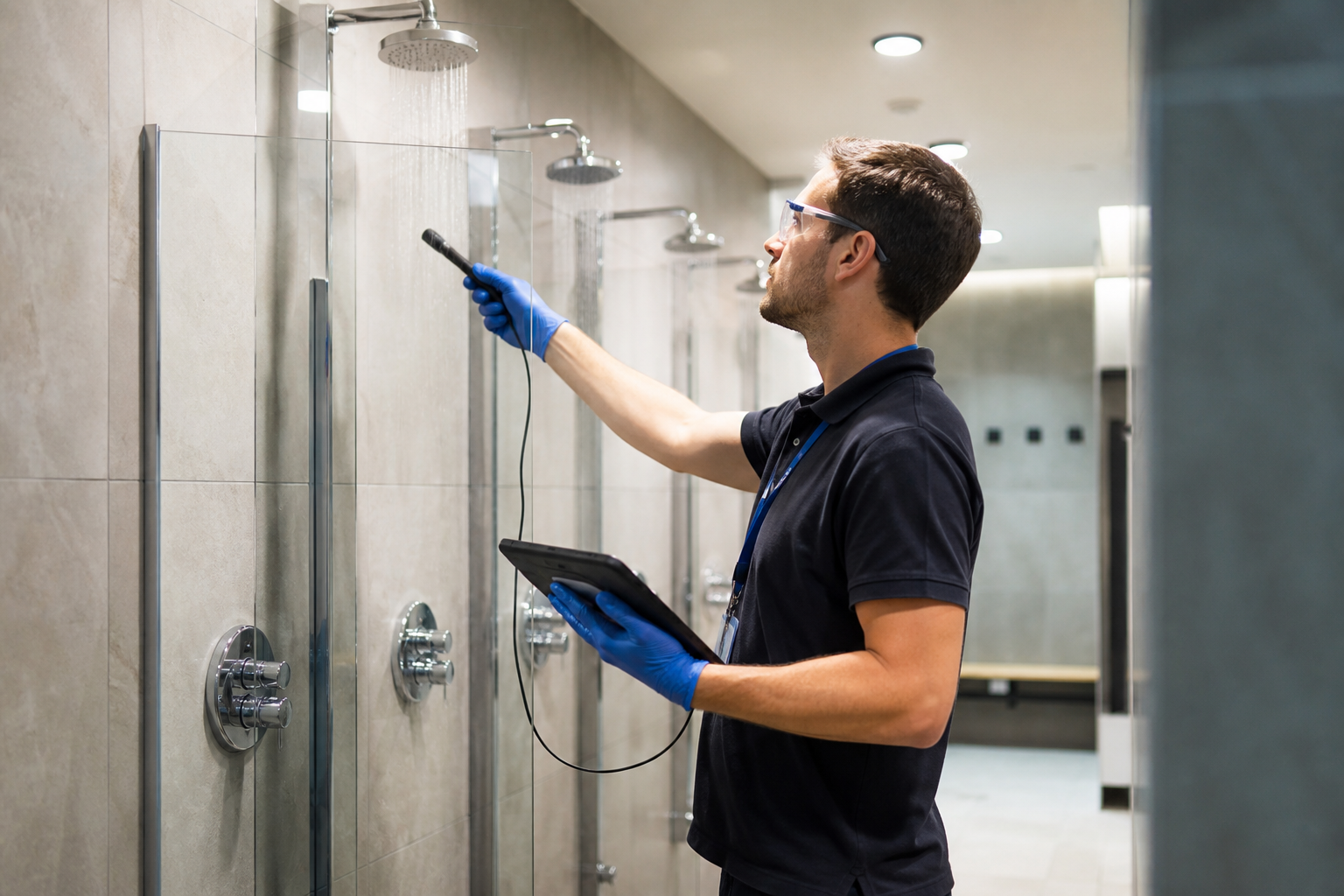
Why showers are an important control point
Legionnaires’ disease is associated with inhalation of contaminated water droplets. Showers can produce aerosols, so their condition, temperature, use pattern and maintenance should form part of the site’s risk assessment and control scheme.
What should operators review?
- Male, female, family and accessible changing-room showers.
- Little-used showers or facilities closed during quiet periods.
- Thermostatic mixing valves and scald-protection arrangements.
- Cold-water tanks, booster sets and hot-water generation.
- Secondary hot-water circulation and return temperatures.
- Showerheads, hoses and visible scale or deposits.
- Staff facilities and cleaning cupboards with water outlets.
- Any spa pools, hot tubs or specialist water features, which require separate attention.
Cleaning alone is not enough
Keeping showerheads visibly clean is good practice, but Legionella control depends on the whole water system. If hot water is not reaching appropriate control temperatures, if cold water is warming excessively, or if parts of the system remain stagnant, cleaning the showerhead alone does not resolve the underlying issue.
Managing low-use areas
Facilities may have showers that are rarely used, especially accessible units, staff showers or changing rooms linked to seasonal activities. These outlets should be identified within the control scheme. Where flushing is used as a control, it should be carried out safely and recorded.
Temperature monitoring and TMVs
Thermostatic mixing valves can help reduce scalding risk at the point of use, but the hot-water system upstream still needs appropriate Legionella control. The risk assessment should identify where TMVs are installed and make sure monitoring and maintenance arrangements reflect the system design.
When should the risk assessment be reviewed?
Review is sensible after refurbishment, plant replacement, prolonged closure, changes in membership or opening hours, addition of spa facilities, or repeated failures in temperature or maintenance checks.
For more on low-use outlets, see Managing Little-Used Outlets in London Offices; the same stagnation principle can apply in leisure facilities.
Official guidance: Health and Safety Executive (HSE) L8 Approved Code of Practice, HSG274 Part 2, and Legionnaires’ disease: what you must do.
Gym or leisure-centre assessment in London: Contact info@londonwatercompliance.com.uk.