Hotels and serviced apartments can present a distinctive Legionella challenge because water use varies by room, floor and season. A property may be busy overall while individual rooms remain empty for days or weeks. Showers, flexible hoses, spa facilities, storage tanks and central hot-water systems can all increase the need for structured water-safety management.
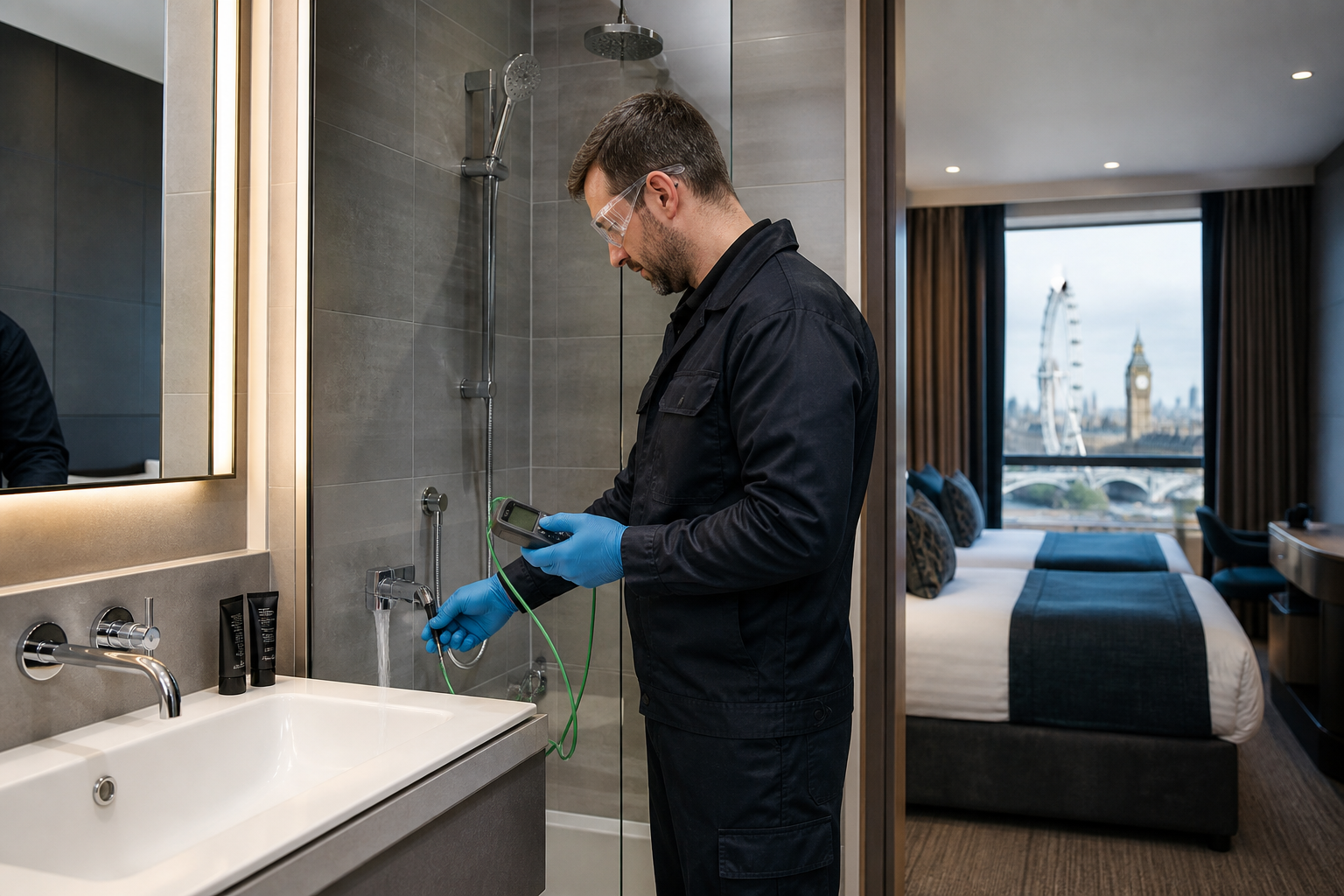
Why hotel occupancy patterns matter
Legionella bacteria can grow where water remains stagnant and temperatures are favourable. In a London hotel, rooms that are out of service, undergoing maintenance or located in a low-occupancy wing may receive far less water turnover than rooms used daily.
Key areas to include in the risk assessment
- Guest-room showers, taps and flexible shower hoses.
- Little-used rooms and seasonal or temporarily closed areas.
- Cold-water storage tanks and booster systems.
- Calorifiers, hot-water return loops and secondary circulation.
- Thermostatic mixing valves and outlets where scald protection is required.
- Staff showers, kitchens, gyms and back-of-house facilities.
- Spa pools or other specialist water systems, where present.
What should a control programme include?
The exact controls depend on the system, but a competent programme normally combines system knowledge, temperature management, inspection, maintenance, management of little-used outlets, corrective action and record keeping. The purpose of the records is not simply to build a logbook; they should help the responsible person identify failures and make sure action is taken.
Do hotels need routine sampling?
Sampling may have a role in some higher-risk or complex systems, but it should not become the sole measure of safety. A single negative result cannot prove that a large hotel system is permanently under control. Effective management depends on the physical condition and operation of the system as a whole.
What about rooms that have been vacant?
Rooms returned to service after extended non-use should be considered within the hotel’s written control scheme. Where flushing is specified, it should be carried out safely and in a way that minimises unnecessary aerosol exposure. Persistent low-use outlets should be addressed systematically rather than managed informally by housekeeping staff.
When should a hotel review its assessment?
Major refurbishment, changed occupancy patterns, new spa or gym facilities, central plant replacement, repeated monitoring failures, extended closure or acquisition of an older property are all sensible triggers for review.
For related guidance on reopening low-use premises, see Legionella in Empty Properties: What to Do Before Reoccupation.
Official guidance: Health and Safety Executive (HSE) L8 Approved Code of Practice, HSG274 Part 2, and Legionnaires’ disease: what you must do.
London hotel or serviced-apartment assessment: Contact info@londonwatercompliance.com.uk for a site-specific Legionella risk assessment.